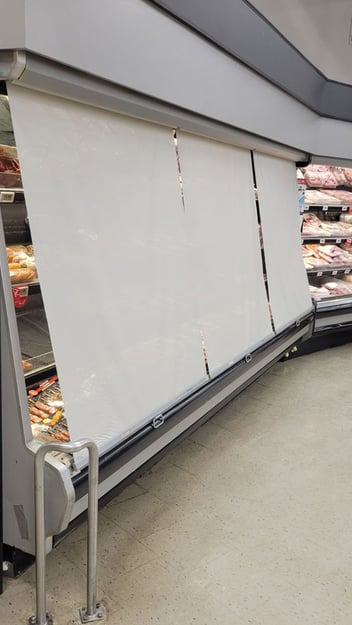
The thermal mechanics behind commercial covers and how they help preserve cold air and product quality overnight
For supermarkets, maintaining consistent temperature in refrigerated display cases after hours is critical for product quality, energy efficiency, and shrink reduction. Open cases naturally exchange cold air for warmer ambient air, causing temperature fluctuations that accelerate spoilage, moisture loss, and product discoloration. Supermarket covers are a practical, cost-effective solution to contain cold air, stabilize internal temperatures, and reduce refrigeration load during non-trading hours.
Why Open Cases Warm Overnight
Even when the store is closed, refrigerated display cases face challenges:
- Cold Air Escape:Without a barrier, chilled air flows out from the front, sides, and gaps in multi-deck or coffin cases.
- Warm Air Intrusion:Ambient store air enters, raising internal case temperatures.
- Humidity Fluctuations:Moisture exchange can dry out fresh produce or condense on glass, affecting appearance.
- Increased Compressor Work:Refrigeration systems work harder to counter temperature rises, consuming more energy and increasing wear.
These factors can result in higher shrink, higher energy bills, and lower morning merchandising quality if left unmanaged.
Covers act as a physical barrier that traps cold air within display cases, producing multiple benefits:
- Temperature Stabilization:Cold air containment prevents large fluctuations, keeping product within ideal ranges.
- Reduced Thermal Stress:Less extreme temperature swings reduce stress on both products and refrigeration systems.
- Moisture Retention:Covers limit air exchange, reducing dehydration in produce, deli items, dairy, and meat.
- Even Cooling Across Shelves:Properly sized covers help maintain consistent temperatures from front to back and top to bottom.
The result is better product preservation, more reliable quality, and reduced first-hour discard.
Energy Savings Through Overnight Coverage
By containing cold air, supermarket covers also reduce refrigeration energy demand:
- Lower Compressor Cycles:With stabilized internal temperatures, compressors cycle less frequently.
- Peak Load Reduction:Preventing sudden temperature spikes reduces strain on the system.
- Operational Efficiency:Less energy is wasted compensating for lost cold air, leading to lower utility costs.
Stores that implement nightly cover routines often see measurable reductions in electricity consumption, particularly in open multi-deck and island display cases.
Department-Specific Advantages
Different supermarket departments benefit uniquely from overnight coverage:
- Produce:Reduces wilting, dehydration, and browning in leafy greens, berries, and herbs.
- Dairy:Maintains consistent temperatures for milk, cheese, and butter, preventing off-flavors and texture changes.
- Meat and Deli:Slows oxidation, preserves front-row color, and reduces moisture loss in packaged and service-counter items.
- Bakery and Prepared Foods:Keeps pastries, cakes, and ready-to-eat meals fresh-looking by minimizing drying and glaze dulling.
Tailoring covers to department-specific needs ensures maximum effectiveness and product protection.
Choosing the Right Cover
Selecting the appropriate cover is key to achieving these benefits:
- Fit and Seal:Covers should fully enclose the case without gaps to prevent cold air escape.
- Material:Durable, food-safe materials resist wear and are easy to clean.
- Ease of Use:Covers should be simple to install and remove nightly to ensure staff compliance.
- Compatibility:Ensure covers work with the case type multi-deck, island, coffin, or endcap without blocking fans or vents.
Proper selection prevents inefficiencies and ensures that covers actually improve temperature stability and product preservation.
Integration With Store Routines
To maximize performance, covers should be integrated into daily store routines:
- Standard Operating Procedure:Incorporate cover deployment into the nightly closing checklist.
- Staff Training:Ensure employees understand the benefits and proper handling techniques.
- Inspection and Maintenance:Check covers for damage, warping, or gaps that reduce effectiveness.
- Performance Monitoring:Track case temperatures and shrink data before and after implementation to quantify results.
A consistent routine ensures overnight protection, reduces labor related to spoilage handling, and improves morning merchandising quality.
Comparing Covers to Other Solutions
While doors or air curtains can provide partial protection, supermarket covers have distinct advantages:
- Doors:May block access but often fail to fully contain cold air, particularly in shallow or multi-deck cases.
- Air Curtains:Reduce warm-air intrusion but still allow temperature fluctuations and require additional maintenance.
- Supermarket Covers:Provide complete containment, are easier to deploy, and reduce both energy use and product degradation.
For many open case configurations, covers outperform alternative solutions in cost-effectiveness and operational simplicity.
Conclusion
Supermarket covers are a simple yet highly effective tool for stabilizing refrigerated display cases overnight. By containing cold air, reducing thermal swings, and maintaining even moisture, covers help preserve product quality, reduce shrink, and lower energy costs.
Retailers who implement high-quality covers and integrate them into consistent nightly routines see measurable improvements across departments from leafy greens and berries to dairy, meat, deli, and bakery products. In addition to protecting products, covers reduce refrigeration system workload, contributing to long-term equipment efficiency and operational savings.
For supermarket operators looking to improve overnight case performance, protect perishables, and enhance energy efficiency, implementing dedicated covers is a practical first step.
To explore commercial-grade night and refrigeration covers designed for multi-deck, island, coffin, and endcap cases, visit www.supermarketcovers.com and discover how simple nightly coverage can support product quality and operational performance.