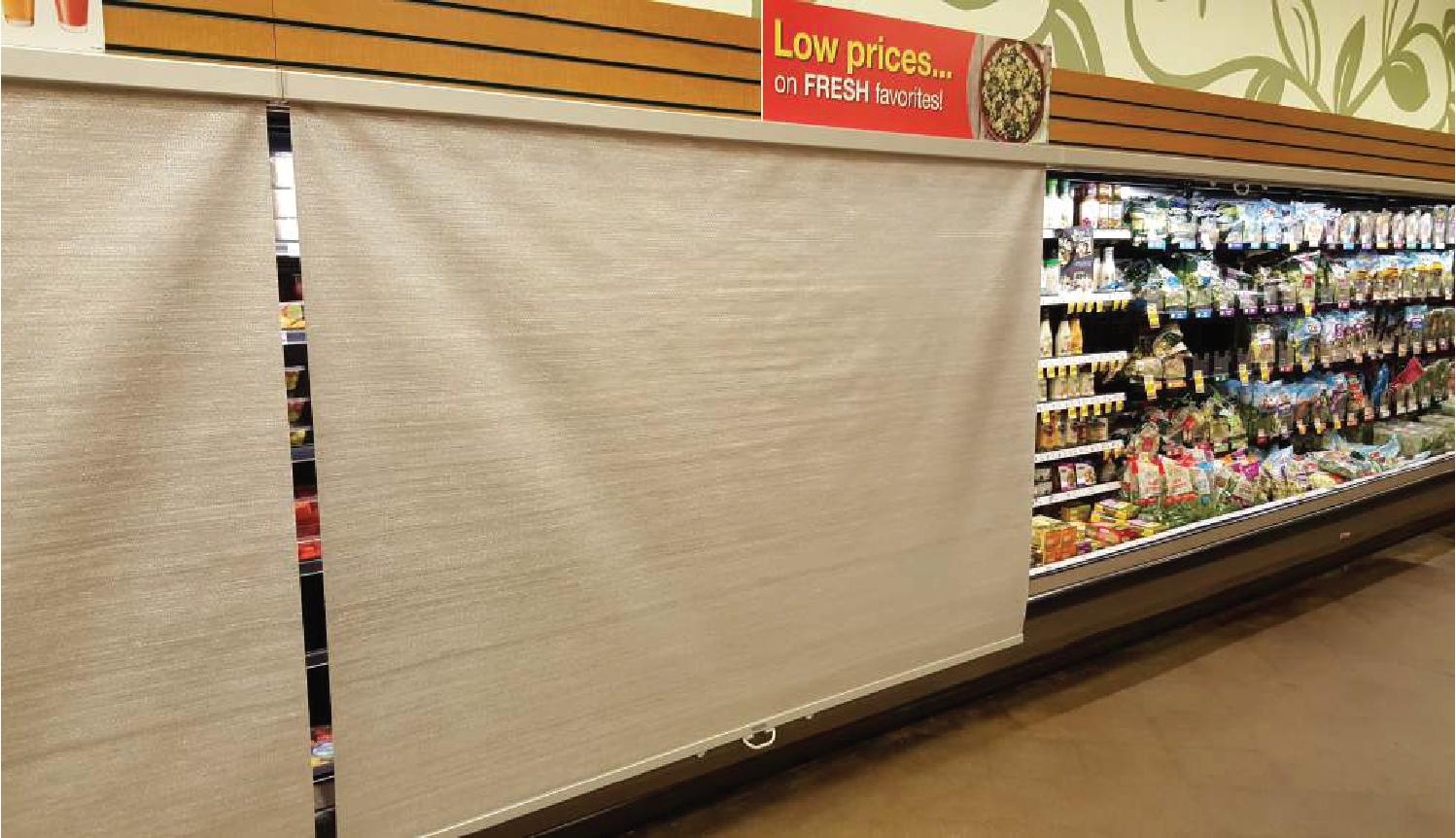
A field guide to fitting, alignment, sealing gaps, and avoiding poor overnight performance
Refrigeration covers are a simple and effective way to reduce energy use, maintain cold case temperatures, and protect perishable products overnight. However, even the best covers will fail to deliver results if they are installed incorrectly. Common mistakes during installation can create gaps, reduce airflow efficiency, and undermine both energy savings and product quality. This guide walks through the most frequent errors and provides actionable tips to ensure covers perform as intended.
Why Proper Installation Matters
Night covers work by creating a thermal barrier between the refrigerated case and the ambient store environment. When installed correctly, they:
- Contain Cold Air: Minimizing warm air infiltration helps compressors run less frequently.
- Stabilize Case Temperatures: Consistent temperatures reduce moisture loss, color fading, and spoilage in produce, meat, dairy, and prepared foods.
- Protect Against Harmful Lights: Covers limit exposure to retail lighting that can accelerate degradation in sensitive products.
Incorrect installation compromises all these benefits, leading to wasted energy, faster product decline, and higher operational costs.
Mistake 1: Improper Measurements
One of the most common issues is using covers that are too small or too large for the display case. Mistakes in measurement can leave gaps or force covers to buckle, reducing their effectiveness.
How to Avoid It:
- Measure case length, depth, and height accurately before ordering.
- Check for obstructions like railings, signage, or shelving that may affect fit.
- Verify whether the case is multi-deck, coffin, island, or tub type, as each requires specific cover sizing.
Properly sized covers ensure a snug fit and optimal thermal containment.
Mistake 2: Misalignment During Installation
Even with correctly sized covers, misalignment during installation can create gaps along the edges or at corners. Cold air escapes through these openings, forcing compressors to work harder overnight.
How to Avoid It:
- Align covers carefully with case edges, ensuring top and side panels meet without gaps.
- Use guides or markings on the case to standardize placement each night.
- Confirm that covers remain straight after the initial installation, particularly on long multi-deck cases.
Consistent alignment maintains thermal integrity and maximizes energy savings.
Mistake 2: Misalignment During Installation
Even with correctly sized covers, misalignment during installation can create gaps along the edges or at corners. Cold air escapes through these openings, forcing compressors to work harder overnight.
How to Avoid It:
- Align covers carefully with case edges, ensuring top and side panels meet without gaps.
- Use guides or markings on the case to standardize placement each night.
- Confirm that covers remain straight after the initial installation, particularly on long multi-deck cases.
Consistent alignment maintains thermal integrity and maximizes energy savings.
Mistake 4: Ignoring Clearance and Obstructions
Obstructions such as signage, shelving, or case hardware can prevent covers from sitting flush against the case, leaving space for warm air to enter.
How to Avoid It:
- Plan the installation layout carefully, accounting for any hardware or signage.
- Remove or adjust obstacles that interfere with proper sealing.
- Consider custom covers for unique case setups to ensure a perfect fit.
Proper clearance ensures that covers are effective across all case types and configurations.
Mistake 5: Not Considering Case Load and Product Placement
Installing covers without considering the product layout can cause uneven cooling or restrict airflow within the case. Overstocked shelves may prevent covers from closing fully, while uneven product heights can create gaps at the top.
How to Avoid It:
- Check that all products fit comfortably under the cover without pressing against the material.
- Maintain consistent product heights across shelves to avoid interference.
- Use airflow-friendly arrangements to promote even temperature distribution.
Accounting for product placement ensures that covers protect all items equally and prevent hot spots.
Mistake 6: Neglecting Routine Maintenance and Inspection
Even a properly installed cover will fail over time if it becomes damaged, warped, or misaligned. Wear and tear can create leaks, reducing energy savings and allowing product deterioration.
How to Avoid It:
- Inspect covers daily for tears, warping, or misalignment.
- Clean covers regularly to remove dust, debris, or grease that can affect sealing.
- Replace damaged covers promptly to maintain performance.
Routine inspection ensures that night covers remain effective for the long term.
Mistake 7: Staff Non-Compliance
All the planning and proper installation can be undone if staff do not deploy covers consistently each night. “Missed nights” reduce energy savings and compromise product protection.
How to Avoid It:
- Include night cover deployment in standard closing routines with clear responsibilities.
- Use checklists or visual reminders to confirm completion.
- Train staff on the operational and financial benefits of proper cover use.
Consistent staff compliance is essential to achieving measurable results.
Key Takeaways for Successful Refrigeration Cover Installation
- Measure First, Install Second: Accurate dimensions prevent gaps and misfit issues.
- Align and Seal Carefully: Straight edges, sealed corners, and flush mounting optimize performance.
- Consider Case Load and Product Placement: Ensure shelves and products do not interfere with covers.
- Account for Obstructions and Clearances: Adjust signage and hardware to allow proper fit.
- Maintain and Inspect Regularly: Replace or repair damaged covers promptly.
- Train and Hold Staff Accountable: Incorporate cover deployment into daily SOPs.
By avoiding these common mistakes, supermarkets can fully realize the energy, operational, and product-quality benefits of refrigeration covers.
Conclusion
Refrigeration covers are an investment in energy efficiency, product quality, and operational efficiency. Proper installation is critical: gaps, misalignment, and inconsistent use can all undermine potential savings and allow product degradation. By carefully measuring, aligning, sealing, and maintaining covers and integrating them into daily routines stores can maximize energy reduction, improve temperature stability, and protect perishable products overnight.
For more guidance on selecting, installing, and maintaining high-quality refrigeration covers, visit www.supermarketcovers.com.